
How CNC Machining Revolutionizes Precision in Semiconductor Manufacturing
Semiconductor manufacturing demands extreme precision. The tiniest error can cause chips to fail or underperform, affecting everything from smartphones to cars. CNC machining plays a crucial role in meeting these exacting standards. This technology enables manufacturers to create components with unmatched accuracy, supporting the complex processes behind chip production.

The Role of CNC Machining in Semiconductor Manufacturing
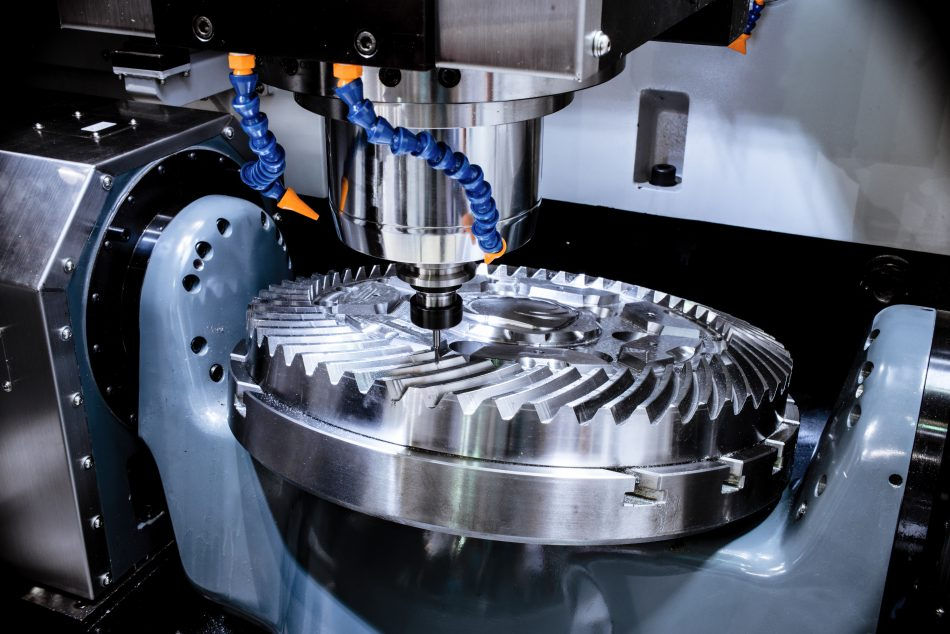
Semiconductor manufacturing involves multiple stages, including wafer fabrication, assembly, and testing. Each stage requires parts and tools made to tight tolerances. CNC machining provides the ability to produce these parts consistently and accurately.
Tooling and Fixtures: CNC machines create specialized tools and fixtures that hold wafers during processing. These tools must fit perfectly to avoid damaging delicate wafers.
Component Fabrication: Parts such as masks, molds, and alignment pins are machined with CNC to ensure they meet strict dimensional requirements.
Prototyping and Small Batches: CNC machining allows quick production of prototypes and small runs, enabling faster development cycles for new semiconductor technologies.
Why Precision Matters in Semiconductor Production
Semiconductors are built on microscopic structures measured in nanometers. Even a slight deviation in component dimensions can cause defects or reduce chip performance. CNC machining helps maintain precision by:
Producing parts with tolerances as tight as a few microns.
Ensuring repeatability so every part matches design specifications.
Reducing human error through automated, computer-controlled processes.
This level of control supports the fabrication of chips with billions of transistors packed into tiny spaces.
Advantages of CNC Machining Over Traditional Methods
Traditional machining methods often rely on manual adjustments and less precise tools. CNC machining offers several advantages:
Automation: CNC machines follow programmed instructions, reducing variability.
Complex Geometries: CNC can create intricate shapes that are difficult or impossible with manual machining.
Speed and Efficiency: CNC machines operate continuously with minimal supervision, speeding up production.
Material Versatility: CNC can work with a wide range of materials used in semiconductor equipment, including ceramics, metals, and composites.
These benefits translate into higher quality parts and faster turnaround times.
Examples of CNC Machining Applications in the Chip Industry
Several specific applications highlight how CNC machining supports semiconductor manufacturing:
Wafer Handling Equipment: Robots and handlers require precision-machined parts to move wafers without contamination or damage.
Photomask Production: Photomasks used in lithography must be machined to exact dimensions to ensure accurate pattern transfer.
Vacuum Chambers and Enclosures: CNC machining produces components for vacuum systems that maintain clean environments during chip fabrication.
Heat Sinks and Cooling Components: Efficient thermal management parts are machined to fit tightly and dissipate heat effectively.
Each example shows how CNC machining contributes to the reliability and performance of semiconductor manufacturing tools.
Challenges and Future Trends
While CNC machining is essential, it faces challenges such as:
Material Hardness: Some semiconductor materials are difficult to machine and require specialized tooling.
Miniaturization: As chip features shrink, machining tolerances become even tighter.
Cleanroom Compatibility: CNC processes must minimize contamination risks in sensitive environments.
Looking ahead, advances in CNC technology include:
Multi-axis Machining: Enables even more complex part geometries.
Integration with AI: Improves process control and predictive maintenance.
Additive and Hybrid Manufacturing: Combines CNC with 3D printing for new possibilities in part design.
These trends will continue to enhance precision and efficiency in semiconductor manufacturing.


Comments