
Emerging Trends in Aerospace Manufacturing and the Role of CNC Machining
The aerospace industry demands precision, reliability, and efficiency in manufacturing processes. As aircraft designs evolve and regulatory standards tighten, manufacturers must adopt advanced techniques to meet these challenges. One technology that continues to shape aerospace manufacturing is CNC machining. This post explores the latest trends in aerospace manufacturing and highlights how aerospace CNC machining plays a critical role in driving quality and innovation.

Increasing Use of Lightweight Materials
Aircraft manufacturers are pushing for lighter components to improve fuel efficiency and reduce emissions. Materials like titanium alloys, aluminum-lithium, and advanced composites are becoming more common. These materials offer strength without the weight penalty but require precise machining techniques.
Aerospace CNC machining excels in handling these materials. For example, titanium is notoriously difficult to machine due to its hardness and tendency to generate heat. CNC machines equipped with specialized tooling and cooling systems can maintain tight tolerances while preventing material damage. This capability allows OEMs to produce lightweight parts that meet strict aerospace standards.
Integration of Additive and Subtractive Manufacturing
Additive manufacturing (3D printing) is gaining traction in aerospace for producing complex geometries and reducing waste. However, many parts still require finishing processes to achieve the necessary surface quality and dimensional accuracy. This is where aerospace CNC machining complements additive methods.
Manufacturers often use CNC machining to refine 3D printed parts, removing support structures and achieving precise dimensions. This hybrid approach combines the design freedom of additive manufacturing with the accuracy of CNC machining, enabling the production of components that were previously impossible or too costly to make.
Automation and Smart Manufacturing in Aerospace CNC Machining
Automation is transforming aerospace manufacturing floors. CNC machines now integrate with sensors, software, and robotics to create smart manufacturing environments. These systems monitor tool wear, machine health, and part quality in real time, reducing downtime and improving consistency.
For example, some aerospace CNC machining centers use adaptive control systems that adjust cutting parameters based on sensor feedback. This reduces the risk of defects and extends tool life. Additionally, automated loading and unloading systems speed up production cycles, helping manufacturers meet tight delivery schedules.
Focus on Sustainability and Waste Reduction
Environmental concerns are influencing aerospace manufacturing decisions. Reducing material waste and energy consumption is a priority. CNC machining contributes by enabling near-net-shape manufacturing, where parts are machined from blanks that closely match the final shape. This approach minimizes excess material removal.
Moreover, modern CNC machines are designed to be energy efficient and use coolant recycling systems. Some manufacturers also repurpose metal chips and scrap, turning waste into reusable raw materials. These practices align with the aerospace industry's goals to lower its environmental footprint.

Enhanced Precision with Multi-Axis CNC Machines
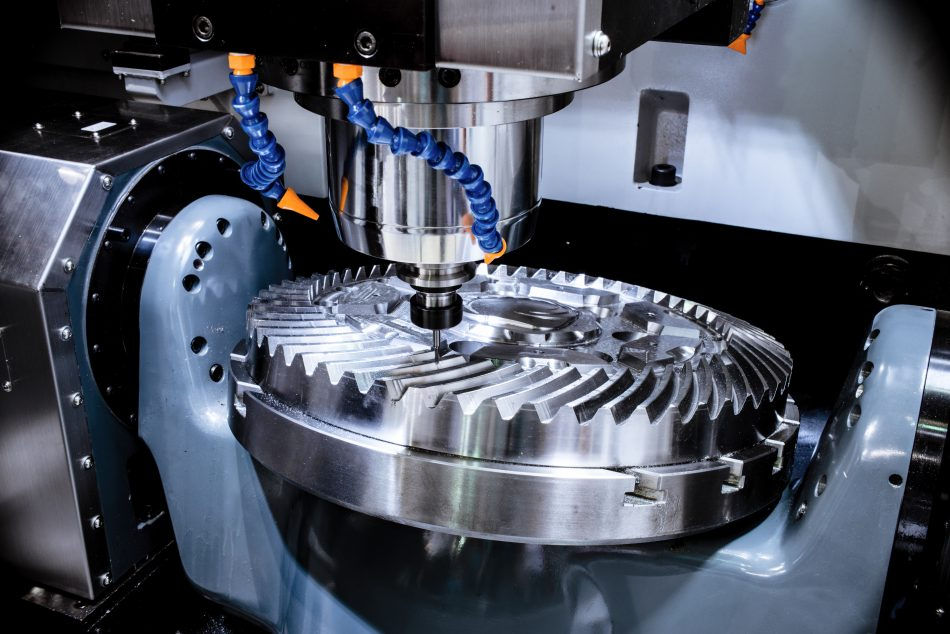
The complexity of aerospace parts demands machining centers capable of multi-axis movement. Five-axis CNC machines allow simultaneous cutting along multiple planes, enabling the production of intricate shapes in a single setup. This reduces errors caused by repositioning and shortens production time.
For instance, turbine blades and structural brackets often require complex contours and tight tolerances. Multi-axis aerospace CNC machining ensures these parts meet design specifications without compromising structural integrity. This precision is critical for safety and performance in aerospace applications.
Digital Twin and Simulation Technologies
Digital twin technology is becoming a valuable tool in aerospace manufacturing. By creating a virtual model of the CNC machining process, engineers can simulate tool paths, detect collisions, and optimize cutting strategies before actual production. This reduces trial-and-error and prevents costly mistakes.
Simulation software also helps in training operators and planning maintenance schedules. When combined with real-time data from CNC machines, digital twins provide a comprehensive view of manufacturing operations, improving decision-making and efficiency.
Customization and Small Batch Production
The aerospace sector often requires customized parts or small production runs for prototypes and specialized aircraft. Aerospace CNC machining offers the flexibility to switch between different designs quickly without extensive retooling.
This adaptability supports rapid prototyping and iterative design processes. Manufacturers can test new components, gather feedback, and refine designs faster than with traditional manufacturing methods. This agility is essential for innovation and responding to changing market demands.
Conclusion
The aerospace industry is evolving rapidly, driven by the need for lighter, stronger, and more efficient aircraft. Aerospace CNC machining remains a cornerstone technology, enabling manufacturers to work with advanced materials, integrate new manufacturing methods, and maintain high precision. Trends like automation, sustainability, and digital simulation are enhancing CNC machining capabilities, helping OEMs and aircraft manufacturers meet the challenges of modern aerospace production.
To stay competitive, aerospace manufacturers should continue investing in advanced CNC machining technologies and explore hybrid manufacturing approaches. These steps will support the production of safer, more efficient aircraft while reducing costs and environmental impact. The future of aerospace manufacturing depends on combining proven machining techniques with emerging innovations.


Comments